Purchases are not available yet. You can browse the site and sign in.
Psilocybin Microdosing Double-Blind Trial Results · Microdosing College
Science
Inside the Double-Blind Psilocybin Microdosing Trials
By Microdosing College Editorial·Last updated November 6, 2026·7 min read
What a psilocybin microdosing double-blind trial actually looks like
The term psilocybin microdosing double-blind trial sounds straightforward, but running one turns out to be unusually difficult. A proper randomised controlled trial (RCT) requires that neither participants nor researchers know who received the drug. With psilocybin, even sub-perceptual doses produce subtle physiological cues — mild changes in heart rate, slight warmth, a faint shift in alertness — that can break the blind for attentive participants. That single methodological problem explains why the evidence base remains thin more than a decade into renewed scientific interest.
This article reviews what the available psilocybin-specific controlled microdosing studies found on cognition and mood, where their results conflict, and what remains genuinely unresolved. For the broader landscape of how researchers measure blinding integrity, see . For the full Science pillar, visit .
As of mid-2026, only a small cluster of published, placebo-controlled trials have used psilocybin specifically (rather than LSD) at microdose-range doses. The most cited are:
Cavanna et al. (2022) (Translational Psychiatry) ran a double-blind, crossover design in healthy volunteers using 0.5 g of dried psilocybin mushrooms — a dose chosen to stay sub-perceptual for most people. Participants completed cognitive batteries across multiple sessions. The study found no significant improvement in fluid intelligence, working memory, or mental flexibility compared with placebo. Subjective wellbeing scores shifted marginally in the psilocybin condition, but not consistently enough to reach statistical significance.
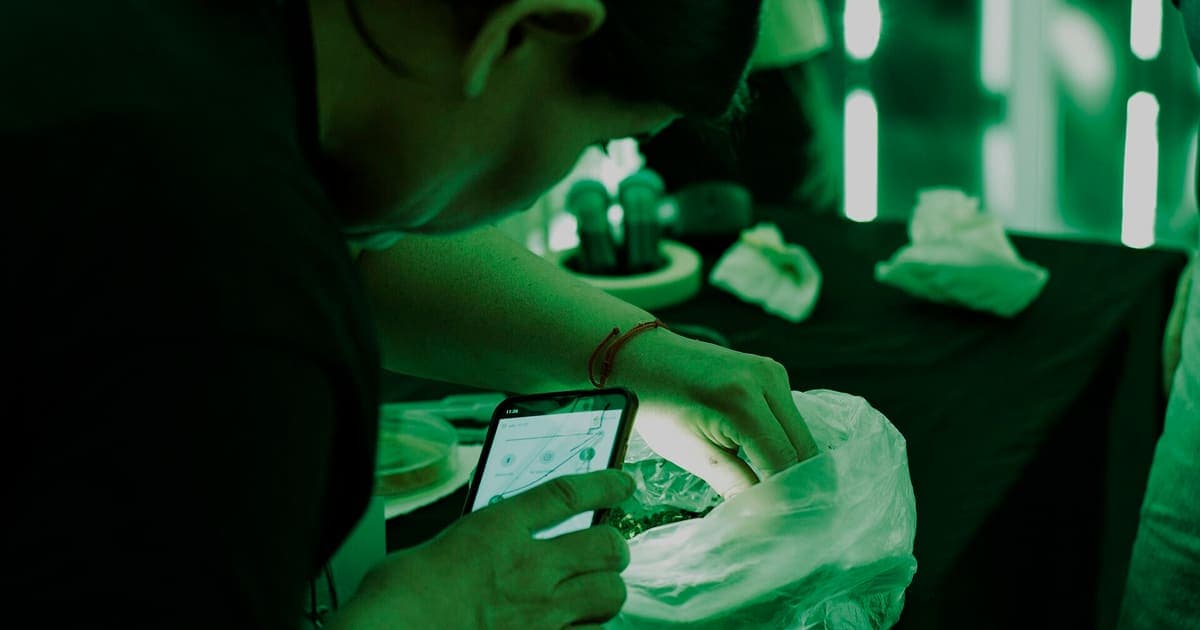
Szigeti et al. (2021) (eLife) took a different route: a "self-blinding" citizen-science design in which 191 active microdosers encapsulated their own substance and randomly assigned themselves to drug or placebo weeks using a smartphone protocol. This is the largest placebo-controlled psilocybin microdosing dataset to date. Both the drug and placebo groups reported improvements in mood, focus, and wellbeing over the study period — and the improvements were statistically similar between groups. The authors concluded that the data are consistent with a substantial expectation (placebo) component driving reported benefits, though they could not rule out a modest pharmacological signal obscured by the study's self-blinding limitations. The self-blinding citizen science study article covers their methodology in depth.
Polito and Liknaitzky (2024) (Journal of Psychopharmacology) conducted a rapid review of both LSD and psilocybin controlled microdosing studies. Their conclusion: the evidence is mixed, blinding failures are common, sample sizes are small, and neither a purely pharmacological nor a purely placebo account adequately fits all the data. They argue the most intellectually honest position is that both mechanisms may be operating, with their relative contributions still uncertain.
Cognitive outcomes: what the data show
Popular accounts of microdosing often foreground cognitive enhancement — sharper focus, faster thinking, creative breakthroughs. The controlled trial record provides little support for these claims at psilocybin-specific microdose levels.
Across the Cavanna et al. study and smaller pilot work, no trial has demonstrated a robust, replicable improvement in standardised cognitive performance in healthy adults taking psilocybin microdoses under blinded conditions. Fluid intelligence tasks, reaction time measures, and executive function batteries have each been examined; effect sizes are consistently small and typically non-significant after correcting for multiple comparisons.
This aligns with data from the LSD microdosing literature. The LSD microdose cognition evidence article shows a similarly null or weak picture: de Wit and Bershad et al. (2019) found mixed and modest effects on cognition in a double-blind single-dose LSD study, with no clear enhancement signal. The pattern across both substances suggests the popular narrative of microdosing as a reliable cognitive tool is not yet supported by controlled evidence.
This does not mean no effect exists. Several considerations limit what current trials can conclude:
Sample sizes are small (most studies have fewer than 50 participants), limiting statistical power to detect modest effects.
Healthy volunteers may have a ceiling effect — cognitive enhancement is easier to detect in participants with baseline impairment.
Acute versus repeated dosing differs; most trials measure single-dose or short-course effects, not the weeks-long protocols typical of real-world microdosers.
Dose calibration is imprecise, since psilocybin content in dried mushroom material varies substantially — a recurring challenge noted in consistent microdose truffle variability.
Mood outcomes and the placebo problem
Mood is where results become more interesting — and more contested. Several smaller studies and the Szigeti et al. citizen-science dataset report genuine improvements in self-reported mood, anxiety, and wellbeing in the drug condition. The problem is that placebo arms also improve, often by similar magnitudes.
The Szigeti et al. (2021) data are particularly important here. Because participants self-selected as people who believe in microdosing, expectation was high across both drug and placebo groups. Both groups improved. The drug group showed a small additional benefit on some sub-scales, but the headline finding was parity: belief in having taken the drug predicted outcome more strongly than whether the drug was actually taken.
Polito and Liknaitzky (2024) note this is not a trivial finding. A strong placebo response to an intervention a person believes in is itself a psychologically meaningful outcome — but it has different implications for policy, clinical use, and self-experimentation than a direct pharmacological effect would.
For those weighing survey evidence against trial evidence, microdosing survey vs. trial evidence unpacks why observational data consistently look more positive than blinded studies — and what that gap tells us about how expectation shapes experience.
Why the blinding problem may never fully resolve
One underappreciated structural challenge is that psilocybin microdosing may be inherently difficult to study with standard RCT methods. Blinding is essential for separating drug from placebo effects, yet psilocybin — even at sub-perceptual doses — produces physiological signals that allow a non-trivial proportion of participants to guess their allocation correctly. Once the blind is broken, outcomes data become entangled with expectation.
Researchers have tested active placebos (niacin, low-dose melatonin) to mimic mild physiological noise, but no perfect solution exists. This is not a criticism specific to any single study team; it is a property of the molecule. The expectation effects research article examines how researchers attempt to quantify and correct for this bias.
For a mechanistic perspective on why even very small doses of psilocybin might produce detectable signals — through TrkB receptor binding and downstream neuroplasticity pathways — see TrkB receptor psychedelics mechanism.
What this means in practice
The honest summary of the psilocybin microdosing trial literature is: the controlled evidence base is small, the blinding is imperfect, the cognitive enhancement signal is weak, and the mood signal is real but difficult to disentangle from expectation. That is not a finding that justifies either dismissing the practice or endorsing it as pharmacologically proven.
For anyone considering microdosing, these gaps matter. Reported benefits in surveys and community forums reflect real experiences — but those experiences are shaped by belief, context, and expectation as well as (possibly) by psilocybin itself. The microdosing expectation effects research and the open research questions articles cover what better-designed future studies would need to address.
This is not medical advice. Any decision about whether microdosing is appropriate for your situation should begin with the personal screener. If you are considering microdosing alongside existing medications or a mental health condition, speak with a qualified clinician before proceeding.
Frequently asked
How many double-blind psilocybin microdosing trials exist?+
As of mid-2026, only a handful of published, placebo-controlled studies have specifically tested psilocybin at sub-perceptual (microdose) levels. The most cited are Cavanna et al. (2022) in Translational Psychiatry and the self-blinding citizen-science study by Szigeti et al. (2021) in eLife. The total number of participants across all such trials remains below 300.
Do psilocybin microdosing trials show cognitive improvements?+
No controlled trial has demonstrated a robust, replicable improvement in standardised cognitive performance in healthy adults at psilocybin microdose levels. Effect sizes in the Cavanna et al. (2022) study were small and non-significant. Researchers note that small sample sizes, ceiling effects in healthy volunteers, and blinding failures limit what current evidence can rule in or out.
Do placebo groups also improve in microdosing trials?+
Yes. In the largest placebo-controlled microdosing dataset (Szigeti et al., 2021, n=191), both the drug and placebo groups reported similar improvements in mood and wellbeing. The authors concluded that expectation — the belief that one is taking a beneficial substance — may account for a substantial portion of reported benefits.
Why is it hard to run a proper blind in psilocybin microdosing studies?+
Even at sub-perceptual doses, psilocybin can produce subtle physiological signals — mild changes in heart rate, slight warmth — that allow some participants to guess whether they received the drug or placebo. Once blinding is broken, reported outcomes are shaped by expectation as well as pharmacology, making it difficult to isolate a clean drug effect.
What should I take away from this evidence if I am considering microdosing?+
The controlled trial evidence is limited, imperfect, and mixed. Cognitive enhancement claims are not supported by current blinded data. Mood improvements appear in trial data but are comparable to placebo in the best-powered study. That does not mean no benefit is possible, but it means any decision should be made with realistic expectations. Use the personal screener at /screener and consult a clinician if you have a health condition or take medications.
This guide is general educational information about microdosing, not medical advice and not a recommendation to use any substance. It can't account for your personal health. If you take medication or live with a mental-health condition, speak with a qualified professional before making any decision.