Purchases are not available yet. You can browse the site and sign in.
Psilocybin Truffle Dose Equivalent: Why Charts Mislead · Microdosing College
Substances
Translating Clinical Psilocybin Doses Into Real Truffle Amounts
By Microdosing College Editorial·Last updated September 9, 2026·7 min read
Why the psilocybin truffle dose equivalent question is harder than it looks
A common starting point for anyone reading clinical trial coverage is to ask: if researchers gave participants 25 mg of psilocybin, how many grams of truffle is that? The question is reasonable. The answer is that no reliable, single conversion exists — and understanding why is more useful than any chart. Psilocybin truffle dose equivalent calculations break down because they collapse three separate sources of variability into a single number that then gets treated as fact.
This article explains those sources of variability using the published potency and pharmacology literature, so you can interpret trial doses and truffle product labels with appropriate caution. For the broader question of how synthetic and whole-truffle psilocybin differ, see our companion piece on .
Federal and academic research protocols use pharmaceutical-grade synthetic psilocybin — a chemically pure compound dispensed in weighed capsules under controlled conditions. Dose is typically expressed as milligrams of psilocybin per 70 kg of reference body weight (mg/70 kg), or increasingly as a fixed milligram amount regardless of weight.
A landmark Johns Hopkins analysis by Garcia-Romeu et al. (2021) examined 20 mg/70 kg and 30 mg/70 kg doses and found that body weight did not reliably predict subjective response — suggesting that even the weight-adjusted approach common in pharmacology does not straightforwardly map onto the psychedelic experience (Garcia-Romeu et al., Journal of Psychopharmacology, 2021). What this means practically is that the relationship between dose and effect is not linear and simple even for the pure compound. Starting from a messy biological substrate — a truffle — compounds that uncertainty further.
For a deeper look at why body weight matters less than expected, see our research library.
The potency variability problem in truffles
When you buy a truffle product, you are buying a sclerotium — an underground, hardened mycelial mass produced by species such as Psilocybe tampanensis or Psilocybe mexicana. Pellegrini et al. (2013) analysed the psilocybin and psilocin content of commercially available sclerotia and found meaningful variation between samples, confirming that these are not standardised pharmaceutical preparations (Drug Testing and Analysis, 2013).
More recent strain-level research makes the picture even more complex. A 2025 comprehensive analysis of 42 psilocybin-producing fungal strains across 9 species published in Scientific Reports found significant metabolite diversity between strains — including between strains of the same nominal species (DOI: 10.1038/s41598-025-97710-z). This is not a minor rounding error. Potency differences between strains or batches can be several-fold, meaning that one gram of truffle from one batch could carry meaningfully more psilocybin than one gram from another, even if the product label describes them identically.
Water content, drying, and what you are actually weighing
Fresh truffles contain roughly 85–92% water by mass. Dried truffles may contain 10% or less. The gram weight on a fresh-truffle product label tells you the weight of water-plus-alkaloid-plus-biological-matrix. It does not tell you the weight of psilocybin.
A study by Gotvaldova et al. (2021) on Psilocybe cubensis biomass found substantial alkaloid degradation over time, particularly under conditions of warmth and light (Drug Testing and Analysis, 2021, via Oregon OHA). This means the psilocybin content of a truffle product is not even stable from purchase to consumption — it declines with poor storage. The practical implication: a "10 g fresh truffle" purchased today and left in a warm drawer for three weeks is not the same dose as a "10 g fresh truffle" consumed immediately.
What a conversion chart actually gives you
Conversion charts circulating in harm-reduction communities typically work from an assumed average psilocybin concentration for fresh truffles — often cited in the range of 0.5–1.0% of dry weight, or approximately 0.05–0.10% of fresh weight. Applying those figures to a 25 mg clinical dose gives a fresh-truffle estimate somewhere in the range of 25–50 g. You will find variants of this calculation published on truffle retail sites and forum threads.
The problem is not the arithmetic — it is that the assumed concentration is an average across a highly variable distribution. Pellegrini et al. (2013) found samples both above and below common assumed averages. The 2025 Scientific Reports strain analysis confirmed that species and strain identity shape alkaloid profiles substantially. An "average" concentration applied to a specific batch may be off by 30%, 50%, or more in either direction.
For a clinical researcher administering a known quantity of pure compound to a consenting participant under medical supervision, 25 mg means 25 mg. For someone weighing truffles at home, "25 mg equivalent" is an estimate with wide confidence intervals — not a prescription.
Minor alkaloids add another layer
Psilocybin is the primary active compound in truffles, but it is not the only tryptamine present. Baeocystin, norbaeocystin, and aeruginascin are also found in variable concentrations across Psilocybe species and strains. Rakoczy et al. (2024) reviewed the pharmacological and behavioural effects of these minor tryptamines and found that their activity profiles differ from psilocybin — though evidence for a meaningful "entourage effect" in humans remains limited (British Journal of Pharmacology, 2024).
Clinical trials using synthetic psilocybin contain none of these compounds. Truffles contain all of them in proportions that vary by strain and batch. Even if two preparations contained identical psilocybin concentrations, the full alkaloid profiles — and potentially the subjective responses — could differ. This is one reason the whole truffle vs. synthetic psilocybin question matters beyond just dosing arithmetic. For more on these minor alkaloids, see our article on baeocystin and aeruginascin and the entourage effect.
What to do instead of relying on a conversion chart
None of this means truffle dosing is arbitrary. It means that precision requires more than a single conversion factor. Practical approaches that reduce — though do not eliminate — dosing uncertainty include:
Start with the lowest reasonable amount and adjust across sessions. The advice to start low is standard in harm-reduction literature not because it is overly cautious but because inter-individual and inter-batch variability is real.
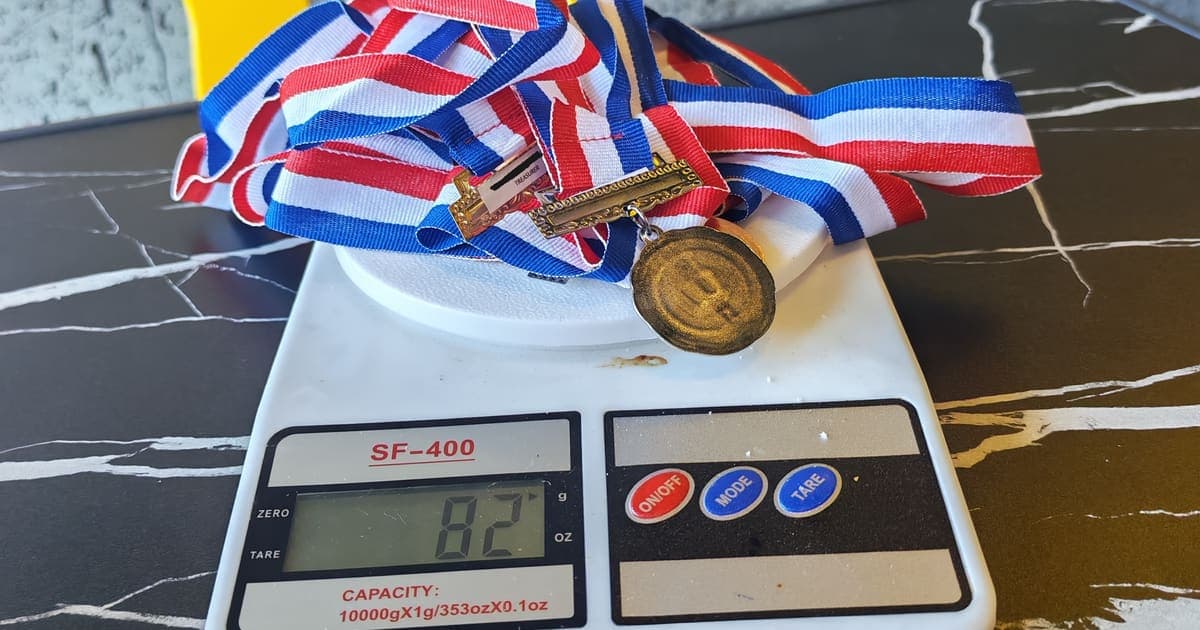
Weigh fresh truffles consistently using a milligram-accurate scale and record results across sessions. See our guide on how to weigh a truffle microdose accurately for practical technique.
Account for storage conditions. Alkaloid content degrades over time, especially in warm, light-exposed environments (Gotvaldova et al., 2021). A truffle stored properly is closer to what the label implies; one stored poorly is not.
Treat conversion figures as orientation, not instruction. Knowing that 10 g of fresh truffle is in the lower-to-mid range for a full experience is useful context. Treating it as a guaranteed equivalent of 25 mg synthetic psilocybin is not warranted by the evidence.
If you are working with a facilitator or considering a retreat context, the screener is a starting point for understanding whether your health situation makes any of this appropriate. No dosing guidance substitutes for an individual assessment.
How many grams of truffle equals 25 mg of psilocybin?+
There is no reliable single answer. Using an average concentration figure of roughly 0.07% psilocybin in fresh truffle weight, 25 mg would correspond to approximately 35 g fresh truffle — but actual concentrations vary substantially between batches, species, and storage conditions, so treat any such figure as a rough orientation rather than a precise equivalent.
Why can't I just use the psilocybin concentration on the product label?+
Most truffle products do not list alkaloid concentration — they list gram weight of fresh material, which is mostly water. Even when concentration data exists, peer-reviewed research (including the 2025 Scientific Reports strain analysis) shows significant variability between strains and batches of the same species. Labelled weight and actual psilocybin content are not the same measurement.
Do clinical trial doses account for body weight?+
Often yes, historically — doses like '25 mg/70 kg' are weight-adjusted. However, a 2021 Johns Hopkins analysis by Garcia-Romeu et al. found body weight did not reliably predict subjective response, which has led some researchers to favour fixed dosing. This is separate from the truffle-conversion problem, but it shows that even the pure-compound dose-response relationship is not straightforward.
Does storage affect how much psilocybin a truffle actually contains?+
Yes. A study by Gotvaldova et al. (2021) on Psilocybe biomass found meaningful alkaloid degradation over time, particularly under warm and light-exposed conditions. A truffle stored poorly for several weeks contains less active psilocybin than its label weight suggests.
Do truffles contain anything other than psilocybin that affects the experience?+
Yes. Truffles also contain baeocystin, norbaeocystin, and aeruginascin in varying concentrations. Rakoczy et al. (2024) reviewed these minor tryptamines and found they have distinct pharmacological profiles from psilocybin. Clinical trials using synthetic psilocybin contain none of these compounds, making direct dose equivalence even less straightforward.
This guide is general educational information about microdosing, not medical advice and not a recommendation to use any substance. It can't account for your personal health. If you take medication or live with a mental-health condition, speak with a qualified professional before making any decision.